Best Tips for Choosing the Perfect Engagement Ring in 2026
Choosing an engagement ring is one of the most personal decisions you'll ever make and in 2026, you have more good options than ever. From classic solitaires to lab grown diamonds, there's something for every style, story, and budget.
This guide is written for couples shopping in India: first-time diamond buyers, working professionals with a fixed budget, and anyone who just wants to make the right call without feeling overwhelmed. If you remember only four things, make them these:
Cut over carat. A well-cut 0.9 ct outshines a dull 1.5 ct. Always certified. No IGI or SGL certificate, no purchase. Consider lab grown. Same diamond, 40–70% less. Buy just under round. 0.90 ct beats 1.00 ct on price, not on looks.
Everything below explains why.
1. Set a realistic budget
The old "three months' salary" rule is outdated. In India today, most couples spend between ₹50,000 and ₹3,00,000, depending on city, lifestyle, and priorities. Plenty are happy in the mid range.
Three things actually move the needle:
-
Value beats size. A well-cut 0.5 ct diamond will outshine a poor-quality 1 ct stone. How a ring catches light matters more than the number on the certificate.
-
Lab grown changes the maths. A lab grown diamond gives you the same sparkle and physical properties as a natural one, typically at 40–70% lower cost, so the budget you had in mind suddenly buys a meaningfully better stone.
-
EMI is widely available. Many trusted jewellers now offer no-cost EMI for 6 to 24 months, so you don't have to compromise on the ring you want.
2. Choose a diamond shape
Shape sets the entire personality of the ring. The popular ones in India right now:
-
Round brilliant — the timeless classic. 58 facets engineered for maximum sparkle. The safe choice if your partner loves tradition.
-
Oval — elegant and elongated; visually lengthens the finger. Trending strongly for everyday wear.
-
Cushion — soft edges, vintage warmth, excellent sparkle. Pairs beautifully with rose and yellow gold.
-
Princess (square) — sharp, modern, geometric. For a bolder aesthetic.
-
Emerald — rectangular step cut with a clean "hall of mirrors" effect. Understated rather than flashy.
Want it to look bigger? Oval, emerald, and marquise cuts appear larger than a round of the same carat weight because they're elongated, useful if size matters but budget is tight.
3. The 4Cs, simply
The 4Cs are the international standard for diamond quality. You don't need a gemology degree, just this:
-
Cut — the most important. Not shape. Cut is how precisely the diamond is faceted. A well-cut stone sparkles from across the room; a poorly cut one looks dull no matter how big. Aim for Excellent or Very Good.
-
Colour — less is better. Graded D (colourless) to Z (light yellow). For engagement rings, G to I is the sweet spot: white to the naked eye, far more affordable than D–F.
-
Clarity — most flaws are invisible. Graded FL to I3. VS2 or SI1 are excellent value — "eye clean," meaning inclusions can't be seen without magnification.
-
Carat — weight, not size. 1 carat = 0.2 grams. A 0.9 ct round can look nearly identical to a 1 ct stone for a significantly lower price.
Quick tip: Buy just below round numbers — 0.90 ct instead of 1.00 ct, 1.80 ct instead of 2.00 ct. Noticeably better value, almost no visible difference.
4. Lab grown vs natural diamonds
This is the most important section for first-time buyers in 2026.
Lab grown diamonds are real diamonds. Same chemical composition, same physical structure, same optical properties as mined diamonds. The only difference is origin — one formed underground over millions of years, the other in a controlled environment.
-
Cost: Typically 40–70% less. A 1 ct natural diamond might run ₹2,00,000 –₹5,00,000; a comparable lab grown one, roughly ₹70,000 –₹1,80,000.
-
Appearance: Identical to the eye. Even jewellers can't tell without specialised equipment.
-
Sustainability: No mining involved — a draw for many younger couples.
Which to choose? Want a larger, better stone within a set budget? Lab grown is exceptional value. Feel strongly about a naturally formed stone? Natural is still perfectly meaningful. Both are real, both are beautiful.
5. Pick the right metal
The band affects look, durability, and cost as much as the stone:
-
18kt gold — 75% pure gold; the most popular choice in India. Strong enough for daily wear, premium look. Available in yellow, white, and rose.
-
14kt gold — 58.5% pure gold; tougher and more affordable. Good if your partner is hands-on or very active.
-
Yellow gold — warm and traditional; flattering on Indian skin tones. Great with cushion and oval cuts.
-
White gold — sleek and modern; rhodium-plated for its bright finish. Re-plating every few years is minor and inexpensive.
-
Rose gold — romantic and contemporary; pairs well with round, cushion, and oval.
-
Platinum — most durable and hypoallergenic; naturally white, no plating needed. Also the most expensive.
6. What's trending in India for 2026
The shift is toward personal expression and thoughtful design:
-
Minimal solitaires — clean single stone on a simple band; still the most loved style.
-
Hidden halos — tiny diamonds set just below the centre stone, visible only side-on. Extra sparkle, no bulk.
-
Oval and elongated shapes — flattering on the hand; still climbing.
-
Vintage-inspired — art deco lines, milgrain edges, lace-like settings.
-
Custom rings — more couples are building from scratch, often with 3D previews before production.
-
Two-tone bands — yellow with white, or rose with white, for a layered look.
7. Why certification matters
Never buy a diamond without a certificate. This is non-negotiable.
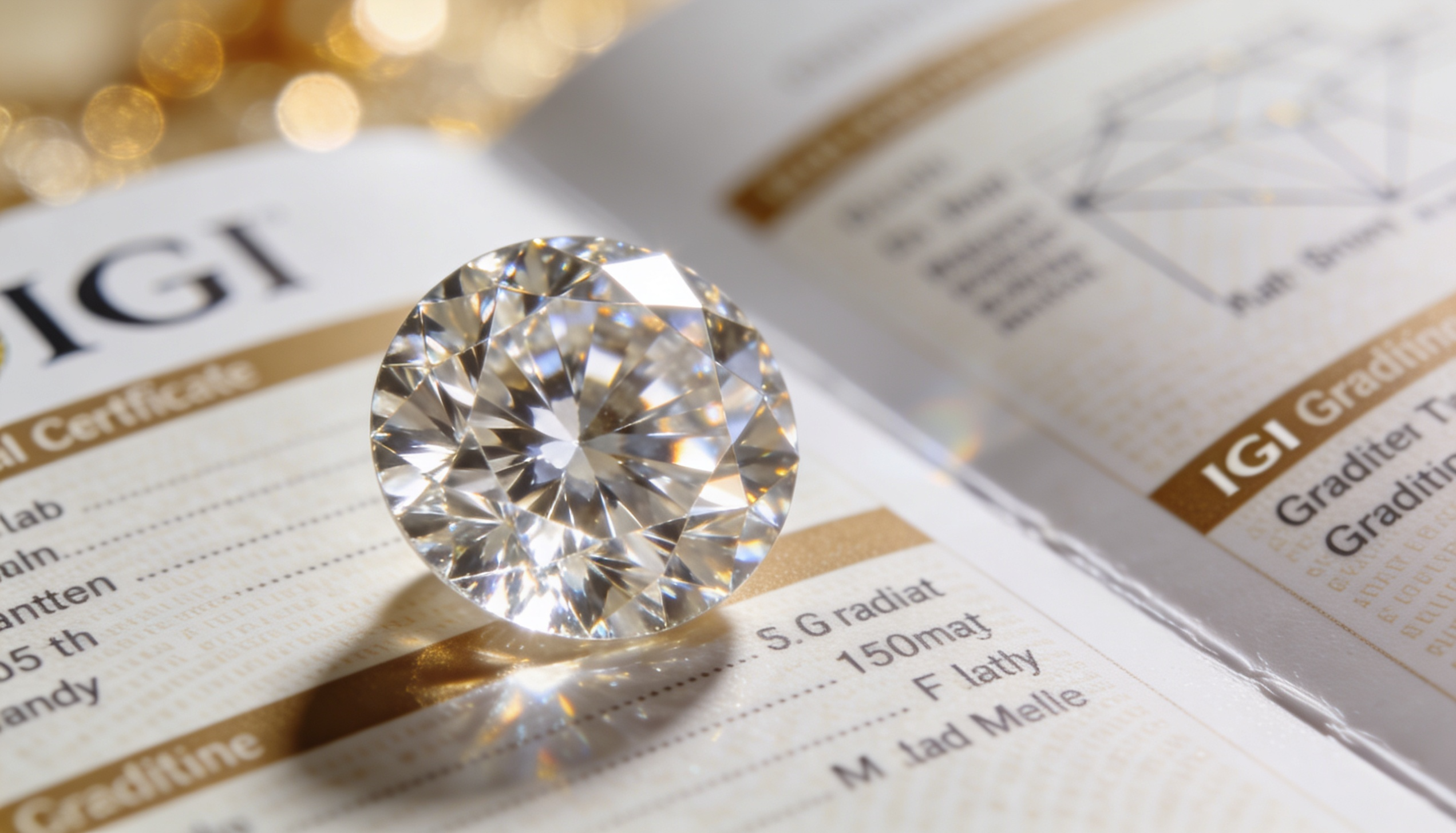
A certificate is an independent lab report documenting the 4Cs, measurements, and identifying characteristics — proof of exactly what you're paying for.
-
IGI (International Gemological Institute) — the most trusted certification for lab grown diamonds globally, and increasingly for natural ones. The preferred choice in India.
-
SGL (Solitaire Gemological Laboratories) — a respected, widely accepted Indian body.
Without certification you have only the seller's word. A trustworthy jeweller will always have certified diamonds available — ask for the certificate before any payment.
8. Mistakes to avoid
-
Buying without a certificate. The single biggest one. Not optional.
-
Guessing the ring size. Borrow an existing ring and measure it, or ask a close friend. Resizing is possible but better avoided.
-
Choosing carat over cut. A poorly cut 1.5 ct loses to a beautifully cut 1 ct. Every time.
-
Skipping the return policy. Confirm return and exchange terms before buying, especially online.
-
Ignoring after-sale care. Rings need periodic cleaning, prong checks, and re-plating. Ask about post-purchase services.
-
Rushing. Allow 2–3 weeks for a custom ring. Don't let urgency push you into a choice you're not sure about.
9. Buying online in India
Online jewellery shopping has matured. Buy confidently if you:
-
Choose transparent certification. Every diamond should list its certificate number, verifiable on the IGI or SGL site.
-
Look for 360° video and zoom images. Not a single flat photo.
-
Read verified reviews that mention the actual product, delivery, and service.
-
Check customisation options — many jewellers let you pick stone and setting separately, with virtual consultations.
-
Confirm EMI and payment options. Most trusted jewellers offer no-cost EMI.
-
Verify BIS hallmarking on the metal — your guarantee of stated gold purity.
10. The bottom line
Choosing an engagement ring is a deeply personal act. It doesn't have to be perfect by anyone else's standards — it has to feel right for you and your partner.
Start with a realistic budget. Pick a shape that matches their personality. Prioritise cut over carat. Consider lab grown for better value without compromise. And always, without exception, buy a certified stone.
In 2026, the Indian market offers more shapes, more metals, more budgets, and more ways to personalise than ever. Take your time, ask questions, and trust a jeweller who's transparent from the start.
The right ring is out there. When you find it, you'll know.
Frequently asked questions
1. Are lab grown diamond rings real diamonds?
Yes, completely. They have the exact same chemical composition (pure crystallised carbon) and physical properties as natural diamonds — same 10 on the Mohs hardness scale. Even gemologists can't tell them apart without specialised equipment. The only difference is origin.
2. What's a reasonable budget in India in 2026?
There's no fixed rule. Most couples spend between ₹75,000 and ₹2,50,000. With lab grown diamonds, your budget stretches significantly further. Focus on cut quality and certification rather than chasing a carat number.
3. Is IGI certification important?
Yes. IGI is the most trusted independent quality report for lab grown diamonds and is globally recognised. Never buy a diamond without a certificate from a reputable lab like IGI or SGL.
4. Will a lab grown ring last as long as a natural one?
Yes. Lab grown diamonds are exactly as hard and durable — both score 10 on the Mohs scale. With proper care and periodic maintenance, a lab grown ring lasts a lifetime.
5. Can I customise an engagement ring online in India?
Yes, and it's become seamless. Several reputable jewellers offer full customisation — shape, carat, metal, setting, and engraving — often with 3D previews and virtual consultations. Custom rings typically take 2 to 4 weeks.