IGI vs GIA vs SGL: Diamond Certifications Explained
What Do Diamond Certifications Actually Mean? IGI vs GIA vs SGL Explained for Indian Buyers
You've found a diamond you love. It sparkles exactly the way you imagined. The price feels right. And then the sales person slides a piece of paper across the counter and says, "Don't worry, it's certified."
But certified by whom? And does it actually matter?
For most buyers in Chennai — and across India — diamond certifications are one of the most misunderstood parts of the buying process. Some sellers wave certificates like they're all equivalent. They're not. Understanding what a certificate actually tells you (and what it doesn't) can be the difference between a smart purchase and an expensive mistake.
This guide breaks it down clearly, without jargon.
What Is a Diamond Certificate?
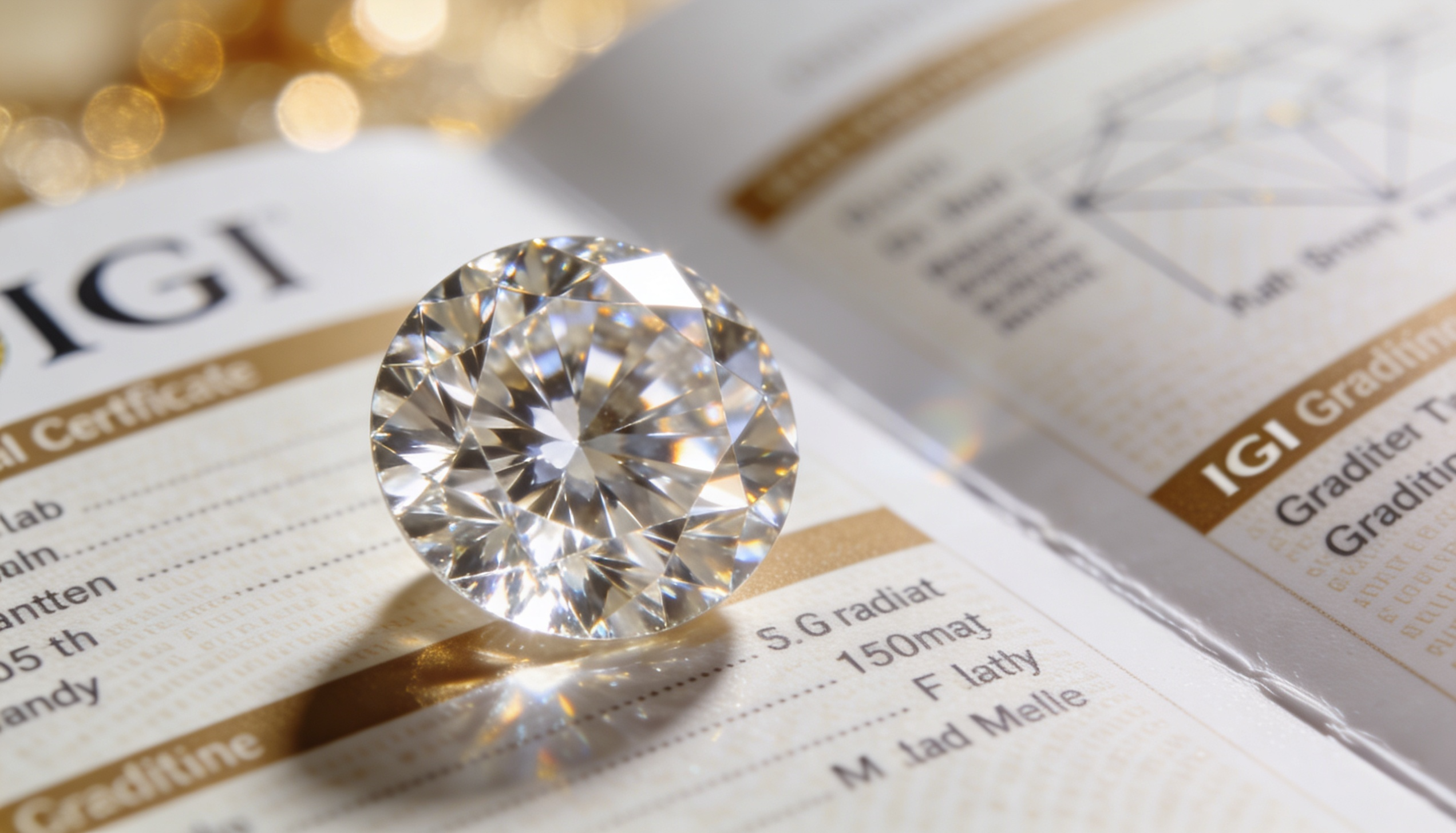
A diamond certificate , also called a grading report, is an independent document issued by a gemological laboratory. It describes the physical characteristics of a specific diamond: its weight, dimensions, cut quality, colour, and clarity.
Think of it like a passport for your diamond. It doesn't set a price. It doesn't guarantee quality by itself. What it does is tell you, in objective terms, exactly what you're buying.
A certificate from a reputable lab means the diamond was examined by trained gemologists who have no financial interest in the sale. That independence is what makes a certificate trustworthy or not.
The Three Labs You'll Encounter in India
IGI — International Gemological Institute
Best for: Lab grown diamonds
IGI is the most widely used certification for lab grown diamonds worldwide, and in India, it's the gold standard for lab grown stones. Glora Diamonds certifies all its lab grown diamonds through IGI.
Founded in Antwerp in 1975, IGI has grading labs in Mumbai, Delhi, and several other cities. For lab grown diamonds specifically, IGI has developed grading standards that are detailed, consistent, and globally recognised.
What an IGI certificate covers:
- Carat weight
- Cut grade (Excellent, Very Good, Good)
- Colour grade (D through Z scale)
- Clarity grade (FL through I3)
- Fluorescence
- Whether the stone is lab grown or natural
- The growth method (CVD or HPHT)
For lab grown diamonds, IGI is the certificate you want. It's what international buyers, resellers, and jewellers look for.
GIA — Gemological Institute of America
Best for: Natural (mined) diamonds
GIA is the most respected name in diamond grading globally. They literally invented the 4Cs grading system that the entire industry uses today. A GIA certificate carries enormous weight in the resale market and among jewellers worldwide.
For natural diamonds, GIA grading is considered the most stringent and consistent. If you're buying a high-value natural diamond, a GIA certificate gives you the highest level of confidence.
However, there's an important nuance for Indian buyers considering lab grown diamonds: GIA grades lab grown diamonds on a slightly different reporting format, and their lab grown reports have historically been less detailed than IGI's. For lab grown stones specifically, IGI reports are considered more comprehensive by many in the trade.
Bottom line: GIA = the benchmark for natural diamonds. IGI = the preferred choice for lab grown diamonds.
SGL — Solitaire Gemological Laboratories
Best for: Lower-stakes purchases; approach with caution for high-value stones
SGL is an Indian certification lab with a significant presence in the domestic market. You'll see SGL certificates often at local jewellers across Chennai, Mumbai, and other cities.
The honest truth: SGL grading is not as stringent as IGI or GIA. Studies comparing the same diamonds graded by both labs have found that SGL tends to grade more generously — meaning a diamond graded G-VS1 by SGL might receive an H-VS2 from IGI.
This doesn't mean an SGL-certified diamond is bad. But it does mean:
- You can't directly compare an SGL grade to an IGI or GIA grade
- Resale value may be affected if buyers expect IGI/GIA
- For high-value purchases (₹50,000 and above), you want IGI or GIA
For fashion jewellery with smaller stones, SGL is generally acceptable. For engagement rings, solitaires, and significant purchases, stick to IGI or GIA.
What the Grades Actually Mean
Colour: D to Z
The colour scale runs from D (completely colourless) to Z (visibly yellow or brown tint). Most buyers assume colourless is always better — but the difference between D and G is invisible to the naked eye, while the price difference is significant.
For lab grown diamonds, Glora recommends EF colour grades. These appear bright white in any setting, and you're not paying a premium for colour differences no one will notice.
| Grade | What It Looks Like | Price Impact |
|---|---|---|
| D–F | Colourless | Premium |
| G–H | Near colourless (looks identical to D–F to the eye) | Moderate |
| I–J | Faint warmth visible in some settings | Lower |
| K+ | Noticeable warmth | Significant discount |
Clarity: FL to I3
Clarity grades describe the number and visibility of internal inclusions (natural imperfections or, in lab grown diamonds, growth characteristics).
| Grade | What It Means |
|---|---|
| FL / IF | Flawless or Internally Flawless — no inclusions visible even under 10x magnification |
| VVS1 / VVS2 | Very Very Slightly Included — inclusions extremely difficult to see under magnification |
| VS1 / VS2 | Very Slightly Included — inclusions difficult to see under magnification, invisible to the naked eye |
| SI1 / SI2 | Slightly Included — inclusions visible under magnification, may be visible to the naked eye |
| I1–I3 | Included — inclusions visible to the naked eye |
For everyday jewellery, VS1 or VS2 offers excellent value — the stone looks perfectly clean to anyone looking at your ring, and you save meaningfully compared to VVS grades.
Cut: The Grade That Matters Most
Cut is arguably the most important of the 4Cs, because it determines how much your diamond sparkles. A perfectly colourless, flawless diamond with a poor cut will look dull. An Excellent-cut diamond with slightly lower colour and clarity grades will outshine it.
IGI grades cut as: Excellent, Very Good, Good, Fair, Poor.
Always aim for Excellent cut when buying lab grown diamonds. Since lab grown diamonds are already priced significantly lower than natural diamonds, you can afford to prioritise cut without stretching your budget.
A Common Trick to Watch Out For
Some sellers — particularly in unorganised retail — will show you a certificate without making it easy to verify. Here's how to verify an IGI certificate yourself:
- Find the certificate number (printed on the report)
- Visit igi.org/verify
- Enter the report number
Within seconds, you'll see the original digital record from IGI's database. If the physical certificate doesn't match what's online, walk away.
GIA verification works the same way at gia.edu/report-check.
If a seller can't give you a certificate number you can verify online, that's a significant red flag.
Do Lab Grown Diamonds Have Different Certification Standards?
Yes — and this is something many buyers don't know.
Until recently, some labs were slower to certify lab grown diamonds, or used different terminology. Today, IGI has the most robust and widely accepted certification system specifically for lab grown diamonds. Every IGI report for a lab grown stone will clearly state:
- That it is a laboratory-grown diamond
- The growth method (CVD or HPHT)
- Full 4Cs grading, identical in format to natural diamond reports
At Glora Diamonds, every stone comes with an IGI certificate. You can verify your diamond's report online before, during, or after purchase.
What a Certificate Cannot Tell You
A certificate is not a valuation. It doesn't tell you:
- What the diamond is worth in the market
- Whether the price you're paying is fair
- How the stone will look in your chosen setting
- Whether it suits your style or skin tone
This is why working with a transparent jeweller matters as much as the certificate itself. At Glora, our team walks you through what each grade means for your specific stone, in plain language, before you decide anything.
The Bottom Line for Indian Buyers
Here's a simple cheat sheet:
| Situation | Certificate to Look For |
|---|---|
| Buying a lab grown diamond | IGI |
| Buying a high-value natural diamond | GIA |
| Budget jewellery with small stones | SGL is acceptable |
| Resale or investment | IGI or GIA only |
Don't let a certificate number alone close the sale. Ask which lab issued it. Look up the report online. And if anything doesn't add up — ask.
Ready to See Certified Lab Grown Diamonds in Chennai?
At Glora Diamonds, every piece comes with a full IGI certificate you can verify instantly. We carry EF VVS and VS grade lab grown diamonds in 14KT and 18KT gold settings — starting from ₹15,000.
You can visit us at T. Nagar, Chennai, or try our stones at home before you decide.
📞 +91 9442222400 💬 WhatsApp: +91 9445079085 📍 31, Govindu Street, North Usman Road, T. Nagar, Chennai 600017
[Book a Free Try-at-Home Appointment →]
Keywords: diamond certification India, IGI vs GIA vs SGL, lab grown diamond certificate Chennai, how to verify diamond certificate, IGI certified lab grown diamonds, diamond grading guide India