

Diamond Education
Exploring Lab-Grown Diamond Jewellery with Glora Diamonds
Explore engagement rings, traditional designs and everyday pieces, with practical questions about origin, documentation, comfort and complete pricing.

On this page
Jewellery marks some of our most personal moments: a proposal, a wedding, an anniversary or a gift chosen simply because someone deserves it. The design matters, but so does understanding what you are buying.
Lab-grown diamonds offer another way to choose diamond jewellery. For buyers in Chennai and Bangalore, Glora Diamonds brings together engagement rings, traditional designs, everyday pieces and custom jewellery consultations.
A mindful purchase starts with clear information: the diamond’s origin, its assessed characteristics, the materials used and the complete price.
What Are Lab-Grown Diamonds?
Lab-grown diamonds are real diamonds produced in controlled environments, commonly using Chemical Vapour Deposition (CVD) or High Pressure High Temperature (HPHT).
They have essentially the same chemical, physical and optical properties as natural diamonds. Their growth characteristics differ, allowing specialist laboratories to identify their origin. GIA explains the distinction between natural and laboratory-grown diamonds.
That does not mean every diamond looks the same. Cut, colour, clarity, dimensions and the setting all influence the finished piece. Compare individual stones and designs rather than choosing on origin or carat weight alone.
Explore Jewellery for Different Parts of Your Life
Engagement Rings and Wedding Bands
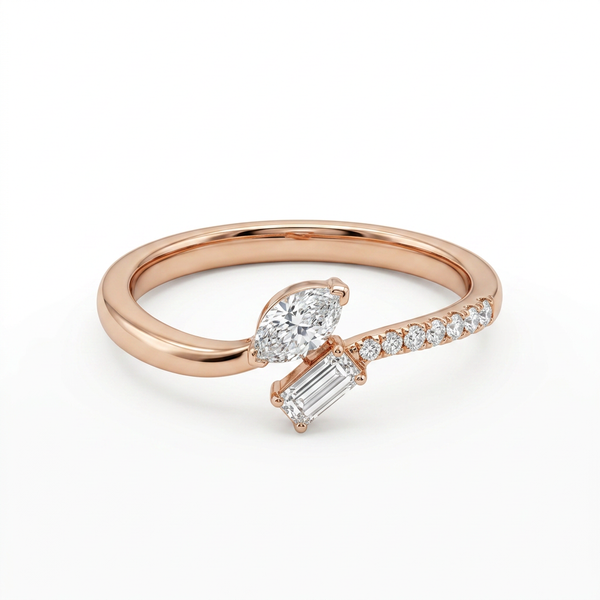
Start with a ring your partner will enjoy wearing. Consider the diamond’s shape, the band’s proportions and how high the setting sits.
Explore Glora’s engagement rings, then discuss your preferred design, stone and budget with the team. If you are choosing engagement and wedding rings together, check how they sit alongside each other.
Traditional Chettinad Designs
Lab-grown diamond jewellery can also suit a traditional design preference.
Glora’s closed Chettinad diamond earrings offer a starting point for buyers exploring jewellery for weddings, festivals and family occasions. Compare the details, dimensions and fastening, and try the earrings on where possible to assess comfort.
Bring photographs of the jewellery or outfit you intend to wear alongside them. This helps you judge the combination before deciding.
Everyday Earrings and Pendants
For jewellery you plan to wear regularly, think about your routine as well as the appearance.
Explore Glora’s earrings and pendants. Check whether the proportions feel right, the fastening is manageable and the piece works with the clothes you wear most often.
Bracelets, Bangles and Gifts
A bracelet or bangle can mark an anniversary, birthday or personal milestone. Browse Glora’s collection, considering fit and the recipient’s existing jewellery.
For a surprise gift, ask about sizing and the applicable exchange terms before ordering.
Create a Design Around Your Preferences
Sometimes you know what you want but cannot find the exact piece.
Glora’s custom jewellery service can be discussed with the team; ask whether a 3D CAD preview is available for your proposed design. Bring a sketch, reference image or idea, and discuss the stone shape, setting, metal options and any engraving.
Use the preview to review proportions and details. Confirm the final specifications, quotation and delivery schedule before approving production—particularly when ordering for a wedding or another fixed date.
Understand Certification and the Complete Price
Ask to see the independent report applicable to your selected diamond or jewellery. Check the issuing laboratory, report number and what the assessment covers.
An IGI laboratory-grown diamond report documents origin and relevant characteristics. For mounted stones, assessments are made as the setting permits. A grading report is not a valuation or a promise of future resale value.
For pricing, request a breakdown of:
-
Diamonds and other stones.
-
Gold purity and metal weight.
-
Making charges.
-
Taxes and the final total.
This makes it easier to compare quotations and decide where to allocate your budget.
What Does “Mindful” Mean When Buying Diamonds?
Lab-grown origin tells you how the diamond was produced. It does not, by itself, establish the environmental impact of the complete jewellery piece.
Look for specific evidence behind environmental claims rather than relying on broad terms such as “green” or “eco-friendly.” The US Federal Trade Commission’s consumer guide gives examples of the evidence to look for. It is general reading from a US regulator, not a statement of Indian law.
A thoughtful choice also means selecting jewellery you want to wear, understanding its specifications and knowing how to care for it.
Explore Glora Diamonds in Chennai and Bangalore
Chennai: Visit Glora Diamonds at 31, Govindu Street, North Usman Road, T. Nagar, Chennai, Tamil Nadu 600017.
You can also enquire about Glora’s free try-at-home service. Confirm availability for your address and the pieces you would like to view.
Bangalore: Explore our Bangalore page and contact the team for current Dickenson Road showroom and consultation details.
Whether you are choosing your first diamond ring or planning a custom bridal piece, contact Glora Diamonds to discuss your style, occasion and budget.
Share
Keep exploring
A little more to discover

Lab-Grown vs Natural Diamonds: A Practical Buying Guide
Compare natural and lab-grown diamonds on origin, price, appearance, reports and purchase terms, with clear questions to ask before buying.

Do Lab Grown Diamonds Have Resale Value? The 2026 Indian Buyer's Guide
Understand the difference between resale, cash buyback and exchange credit, and the valuation questions to ask before purchasing diamond jewellery.

Custom Lab-Grown Diamond Jewellery in Chennai and Bangalore
Bring a sketch, photograph or idea. See what to discuss during a custom jewellery consultation, from materials and design previews to the final quotation.
A little guidance from Glora
Know what your report describes
Exploring Lab-Grown Diamond Jewellery with Glora Diamonds
Use the report and the selected jewellery specification together.
Check the report identity Open to explore
Read the issuing laboratory and report number. Use that laboratory’s own verification service where available and compare the result with the report supplied.
Match the diamond details Open to explore
Compare the shape, measurements, carat weight and stated grades. Ask whether the document covers a centre stone, multiple stones or the finished jewellery.
Keep gold details separate Open to explore
A diamond report and a gold hallmark describe different parts of a piece. Ask for the gold purity and hallmark details separately.
Illustrations explain what to compare; they do not represent a particular product or its dimensions.