


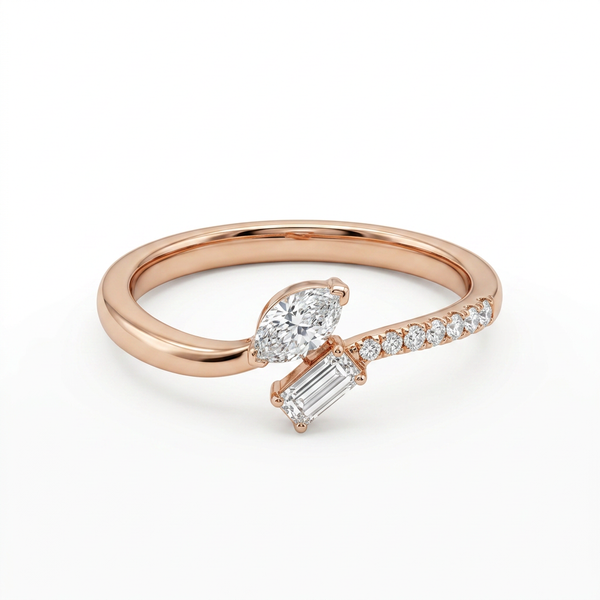
Engagement Rings
Choosing an engagement ring in 2026: a practical checklist
Set a comfortable budget, compare shapes and settings, and confirm the diamond report, hallmark, ring size and written terms before ordering.

On this page
Start with budget, fit and documentation
Set a comfortable budget, choose a style your partner will enjoy wearing, and compare the complete ring price. Look beyond carat weight: check the diamond’s appearance, grading report, gold hallmark and ring size. Confirm delivery, returns and resizing terms before ordering.
1. Set Your Budget
There is no salary-based amount you need to spend. Choose an amount that works for you, then ask what it includes:
-
The centre diamond and any smaller diamonds.
-
The gold band and setting.
-
Making charges and GST.
Compare itemised quotations. Two rings described as “1 carat” may have different centre-stone weights, gold weights and designs.
2. Choose a Shape and Setting
Start with the jewellery your partner already wears.
|
Preference |
Shapes to explore |
|---|---|
|
Classic and understated |
Round or oval |
|
Soft, rounded outlines |
Cushion |
|
Clean, geometric lines |
Emerald or princess |
|
An elongated silhouette |
Pear or marquise |
Then consider everyday comfort. Try the setting on, check how high it sits, and see whether it catches on clothing or fits comfortably beside a wedding band.
3. Look Beyond Carat Weight
Carat measures weight, rather than visible size. Compare the diamond’s dimensions and appearance alongside its colour and clarity.
Cut quality affects how a diamond handles light, so a larger stone is not automatically the more attractive choice. GIA explains diamond cut quality here.
View the actual diamond where possible. A clarity grade alone does not guarantee that inclusions will be invisible to the naked eye.
4. Consider Lab-Grown or Natural Diamonds
Both are real diamonds. Lab-grown diamonds have essentially the same chemical, physical and optical properties as natural diamonds, although their growth characteristics allow specialist laboratories to distinguish them. Read GIA’s explanation.
Compare actual quotations for the quality and design you want, and choose the origin that suits your preferences.
5. Check the Report, Hallmark and Fit
Ask for the applicable independent diamond report and verify its details with the issuing laboratory. An IGI laboratory-grown diamond report identifies origin and assesses the stone’s characteristics.
For gold jewellery, check the hallmark and verify the HUID through BIS Care. BIS provides guidance for buyers.
Have the intended finger measured professionally where possible. Before paying, confirm resizing options, delivery dates, return terms and aftercare—particularly for a customised ring.
Find Your Engagement Ring at Glora Diamonds
Explore Glora’s engagement rings, discuss a custom design, or contact our team for help choosing your stone, setting and size.
Share
Keep exploring
A little more to discover

Diamond shapes for engagement rings: six options to compare
Compare six diamond shapes and consider their outline, proportions and setting requirements when choosing an engagement ring.
Ring Size Chart: Measurements and US/UK Conversions
Use the diameter and circumference chart as a reference, understand US and UK labels, and confirm the correct ordering size with Glora.

Lab-Grown Diamond Price in Chennai: A Quick Guide
A diamond-only quote and a complete ring price cover different things. Compare the stone, metal, making charges, taxes and final payable total.
A little guidance from Glora
Bring your engagement-ring ideas into focus
Choosing an engagement ring in 2026: a practical checklist
Compare the fit, setting and diamond details together.
Confirm the size discreetly Open to explore
Keep a measurement from a ring worn on the intended finger, if available. Note the size system and ask the team to confirm fit for the chosen band.
Consider a future ring stack Open to explore
Compare the side profile and setting height if the ring may be worn with another band. Ask whether the designs can sit comfortably together.
Keep the centre-stone details clear Open to explore
Check the centre diamond’s weight, dimensions and report alongside total diamond weight. Keep the specification with your current quote.
Illustrations explain what to compare; they do not represent a particular product or its dimensions.
Explore Lab-Grown Diamond Engagement Rings
A starting point for your shortlist. Open a piece for its current options, price and details.


